&w=3840&q=80)

The quality of developer experience is most typically measured through things like tooling and processes – e.g. how user-friendly the tooling and the ecosystem are, how good project documentation is, etc.
But, when working together on a team, there’s another key factor to consider – the role a strong, healthy team spirit plays in developer experience. This is what we’re going to focus on in this article.
Why does team spirit matter for employee and developer experience?
A strong team spirit is an essential element of employee experience in general and developer experience in particular. In addition to general improvements in collaboration and communication, it also specifically:
- Improves team cohesion through shared goals and accountability.
- Fosters psychological safety, making it easier for juniors to challenge seniors in healthy ways.
- Supports and promotes learning, knowledge sharing and growth, making developers more versatile, proactive and adaptable.
- Facilitates spontaneous collaboration and solutioning, e.g. through “watercooler chats” and shared “eureka” moments.
- Makes it easier to more effectively onboard junior developers onto the team and new developers onto a project, including both taking and handing over of codebases.
All of these benefits come in handy both on internal and external projects, as well as any kind of open source contribution your developers engage in. They also interplay – i.e., the healthy practices you establish internally will also be extremely useful in these external settings, easing collaboration with new people from clients’ teams and/or online open-source communities.
Also importantly, fostering a strong team spirit also helps with the more technical aspects of developer experience mentioned in the introduction. For example, it can motivate developers to write better documentation out of deeper respect for other people working on the project, or smoothen adoption of certain tools if developers see how this benefits the whole team.
How to foster a healthy team spirit
Now that we have a better understanding of why exactly team spirit is so important for a good developer experience, let’s take a closer look at some tried and tested practices for fostering a healthy team spirit on a development team.
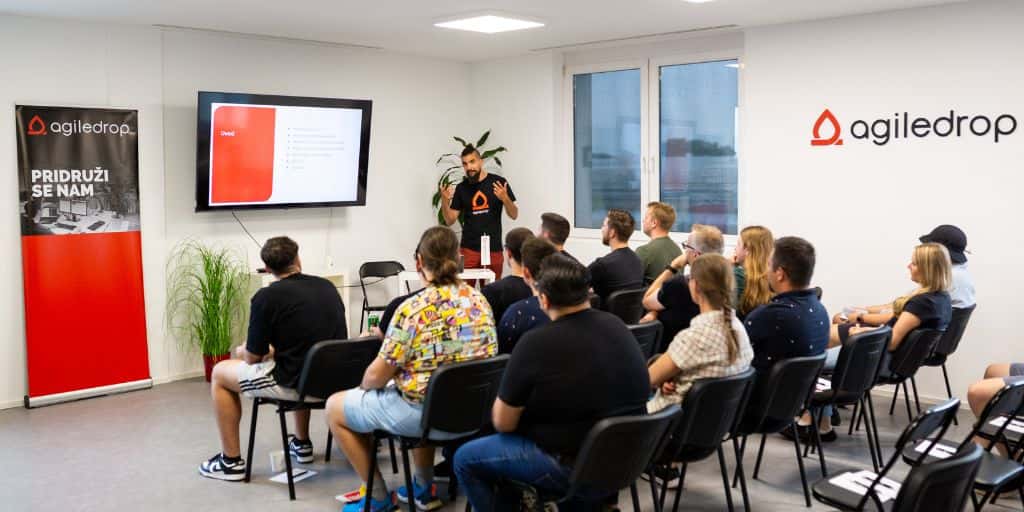
- Support shared learning in forms such as regular internal team talks, hackathons, and, critically, well developed onboarding programs for junior developers where they can get consistent mentorship from more experienced developers. This is one of the best ways for juniors to get used to collaborating with seniors in a healthy way, taking initiative, and sharing their concerns and/or reservations without worrying about potentially undermining their seniority.
- Organise frequent shared non-work team building activities such as various sports, game nights, shared meals, etc. Activities such as escape rooms are especially good at supporting collaboration, often between team mates who haven’t yet had many opportunities to collaborate on a project, and so can be a great way to refresh team dynamics.
- Support asynchronous communication channels which also allow for non-work related banter; whether in-person or online, these help facilitate moments of spontaneous collaboration and shared “eureka” moments highlighted earlier.
- Give incentives for sharing knowledge and for helping team mates either through particularly established roles such as dedicated mentors or other ways, such as financial incentives for things like giving an internal talk, writing and publishing articles for the company blog, or making meaningful contributions to open-source technologies key to your work.
- Hire with culture/value fit in mind. While you should of course consider technical proficiency and experience, keep in mind that, now more than ever thanks to the ease AI introduces into coding, soft skills and traits such as communication, reliability and proactiveness can prove to be invaluable and irreplaceable. As a rule, it’s much easier to learn specific new technologies than to consistently acquire such traits.
- Make sure team spirit is also felt by those team members who are working remotely. While remote work isn’t as dominant as it was 5 years ago, there are still plenty of cases where remote collaboration is unavoidable, for example with distributed teams and/or with development agencies working with international clients. In this latter case, development partnerships can last for years or even decades, with the agency’s developers essentially becoming part of the client’s team, even if they never once meet in person throughout the course of the partnership.
At Agiledrop, we’ve been putting all of these to good use for years, with clear benefits in terms of team spirit and consequently also our client relationships. Many of our core company values are centred around team spirit and developer experience.
In addition to those, we also have a strong internal infrastructure that further facilitates a healthy team spirit. We make use of all the above mentioned ways of incentivising knowledge sharing, as well as other more unique features such as the AgileKarma bot in our team Slack, through which team mates can reward each other with points which they can then exchange for items such as T-shirts, hoodies and laptop bags in the internal shop within our Dashboard app.
Conclusion
Developer experience is more than just efficient tooling and infrastructure. A healthy company culture that promotes team spirit and collaboration is just as important to optimal performance of your developers, which leads to better software and better relationships – both within the team as well as with clients and partners.